Analysis of Asynchrony Detection in Combined Auditory and Vibrotactile Stimuli for Deaf and Hard of Hearing People
IEEE International Conference on Systems, Man, and Cybernetics, 2025
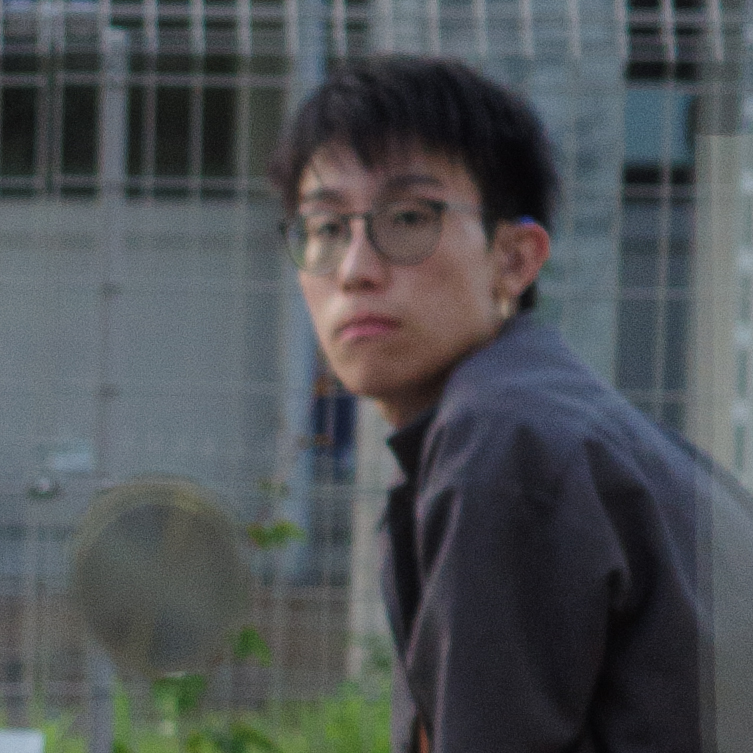
Ph.D. Student
Chiba University Graduate School of Informatics
I am Deaf, and I love singing. I enjoy singing out loud, but what I love even more is knowing how the lyriccs fit into the music—when each word comes in and how the rhythm of the song unfolds. I want musical timing to be accessible even when it is difficult to hear. That motivation drives my research on ways for Deaf and hard-of-hearing people to understand the timing of a song without relying solely on hearing.
Making Singing Timing Accessible Beyond Hearing
My research focuses on the timing of singing. I explore ways to make the rhythm of a song accessible even when it is difficult to hear by conveying when each part of the lyrics should be sung through vibration and other non-auditory cues. To do this, we first need to extract the timing information to be conveyed from the music itself. I use music information retrieval techniques to align vocals with lyrics and estimate when units such as morae are sung. I then translate this timing information into vibration and develop systems that can provide timing cues while singing.For these cues to be useful, they should not feel out of sync with the sound. I therefore also study how Deaf and hard-of-hearing people perceive timing differences between sound and vibration. My goal is to create vibrotactile cues that people can rely on to understand the timing of a song.
Topics
Analysis of Asynchrony Detection in Combined Auditory and Vibrotactile Stimuli for Deaf and Hard of Hearing People
IEEE International Conference on Systems, Man, and Cybernetics, 2025
Auditory-Vibrotactile Asynchrony Detection in Deaf/Hard-of-Hearing and Hearing Using a Single Device
International Symposium on Auditory and Audiological Research (ISAAR), 2025
A Qualitative Research Study to Clarify Why Deaf and Hard of Hearing People Enjoy Singing
Human Interface and the Management of Information: Thematic Area, HIMI 2025, Held as Part of the 27th HCI International Conference, HCII 2025, Proceedings, Part I, pp. 335–347, 2025
ろう・難聴のための正しい歌唱リズム獲得支援システムの開発
人工知能学会全国大会論文集 第 39 回, 3O6-OS-22b-05, 2025 (in Japanese)
ろう・難聴者における同一端末による聴覚刺激と振動触覚刺激の非同期検出能力の分析
第87回全国大会講演論文集, 2025 (in Japanese)
ろう・難聴者と聴者の歌唱を楽しむ背景の比較
情報処理学会研究報告, 2024-AAC-026(6), 2024 (in Japanese)
ろう・難聴の当事者による音楽の情報保障に関する研究紹介と必要性
情報処理学会研究報告, 2024-AAC-026(8), 2024 (in Japanese)
Towards Improving the Correct Lyric Detection by Deaf and Hard of Hearing People
Computers Helping People with Special Needs, pp. 146–154, 2024
歌うことの楽しさ>聴覚障害
情報処理学会研究報告, 2023-AAC-022(8), 2023 (in Japanese)
楽曲におけるボーカルの発声タイミングの振動化のための精度検証-聴覚障害者の音楽体験の向上-
情報処理学会研究報告, 2023-AAC-022(5), 2023 (in Japanese)
"Is my rhythm off?" Supporting singing for Deaf and hard-of-hearing people through understanding
IPSJ-ONE 2026, Matsuyama University, Ehime, Japan, 2026
AI-Core Project: Doctoral Program for AI-Specialized and Challenging Interdisciplinary Innovators
Chiba University (JST BOOST Next-Generation AI Researcher Program), 2026–2029
Student Incentive Award, 39th Annual Conference of JSAI
The Japanese Society for Artificial Intelligence, 2025
Sasakawa Scientific Research Grant
The Japan Science Society, 2025
Student Encouragement Award, 87th National Convention of IPSJ
Information Processing Society of Japan, 2025
Grand Prize, Idea Contest of the Tokyo Digital Society Human Resource Development Program
Tokyo Metropolitan Government, 2023